Why Professional Hosts Must Protect Both Homes and Income
Behind the scenes of modern short-term rental management
Most guests never see what happens when something goes wrong.
They arrive, enjoy the home, and leave happy.
But when a guest becomes dissatisfied — or worse, financially motivated — the real work of a professional hosting agency begins.
This is the part of hosting that protects owners.
The New Reality of Short-Term Rentals
Airbnb is built on trust — but it is also built on reviews.
When everything goes well, reviews reflect the stay.
When conflict arises, reviews can become weapons.
In recent years, a pattern has emerged in global short-term rentals:
A guest encounters (or claims) a problem.
They refuse to leave.
They demand a discount.
If they don’t get it, they threaten or deliver a revenge review.
This is not hospitality anymore.
It is leverage.
And protecting a property from this is now part of professional hosting.
Case Study: When “Uninhabitable” Becomes a Negotiation Tool
In a recent booking, a guest claimed that a home was “uninhabitable” due to ant activity and a minor plumbing leak.
We immediately did what professional operators do:
- A licensed plumber was sent
- Professional pest control was arranged
- Remedial action was taken
At the same time, the guest stated they could not leave and demanded a 30% discount to stay.
That creates a contradiction.
If a home is truly uninhabitable, a guest must leave.
If a guest stays, it is not uninhabitable.
This tactic — known in the industry as “stay-and-demand” — puts owners at risk.
Not because of the ants, but because of what happens next.
The Real Risk: The Revenge Review
When a guest does not get the discount they demand, the next move is often predictable.
A one-star review.
Not because the home failed — but because leverage failed.
And one bad review can materially impact a property’s income.
This is where professional agencies earn their keep.
A Second Case: When a Review Becomes a Weapon
In another instance, a guest left a one-star review after complaining about road noise — even though the listing clearly stated the home was on a main road.
When that did not succeed, the guest escalated and claimed bed bugs.
We provided proof of professional fumigation.
Airbnb declined to remove the review.
The property’s performance dropped.
But this is where recovery matters.
We rewrote the listing copy.
We added a Cleanliness Certificate image alongside the photos.
We proactively addressed guest perception.
Within weeks, occupancy returned to normal high levels.
The damage was neutralised.
The income was restored.
What High Occupancy Really Means
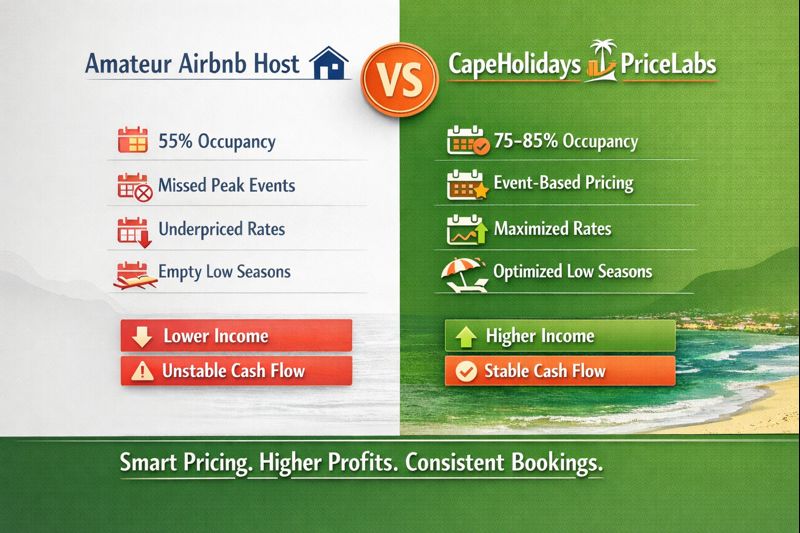
When owners hear that a home runs at 70–75% occupancy, it sounds like a marketing achievement.
In reality, it is a resilience achievement.
Behind every strong-performing listing are moments no guest ever sees: Airbnb disputes, guests refusing to leave, false or exaggerated claims, and the constant risk of reputation damage through reviews.
High occupancy is not created by photos and pricing alone.
It is protected by how problems are handled when something goes wrong.
Anyone can get bookings when everything runs smoothly.
Professional agencies keep properties performing after something breaks, a guest complains, or a bad review hits.
That is the difference between a listing that collapses and one that continues to earn.
Why Owners Need Agencies, Not Just Listings
Most owners think hosting is about:
- Pricing
- Cleaning
- Guests
- Bookings
Professional hosting is actually about:
- Risk management
- Review defence
- Reputation recovery
- Revenue stabilisation
This work is invisible when things go well.
It becomes critical when they don’t.
Without a professional buffer:
- Guests argue directly with owners
- Reviews become personal
- Emotion replaces process
- Income becomes volatile
With an agency:
- Issues are documented
- Airbnb is managed
- Remediation is structured
- Revenue is protected
The Truth About “Perfect” Hosting
No home is perfect.
No guest experience is flawless.
But a well-run property does not depend on perfection.
It depends on how problems are handled — and how reputations are defended.
That is what professional agencies really provide.
Not just bookings.
But stability.